
Indian Vs Western Music
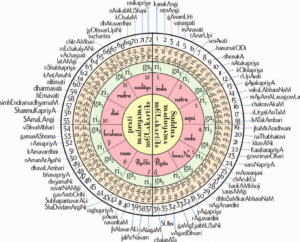
The essence of music can be said to be – relationships of sounds. If we look up the word “music” in the Oxford dictionary, it gives the following definition:
Vocal or instrumental sounds (or both) combined in such a way as to produce beauty of form, harmony, and expression of emotion.
Music in India has very ancient roots. Indian classical music is considered to be one of the oldest musical traditions in the world but compared to Western music very little work has been done in the areas of genre recognition, classification, automatic tagging, comparative studies, etc.
Difference between Indian and Western Music

Culture
Indian music, in its classical form, is broadly classified into two major traditions: The North Indian music and the South Indian music. The North Indian classical stream is known as Hindustani, while the South Indian classical music is called Carnatic. Both are collectively referred to as Indian classical music, but there are some slight differences in ornamentation, scale creations, and articulation. Western music, on the contrary, is the genre of art music that celebrates the life of Europe, the United States, and other societies established by European immigrants.
Melody / Harmony
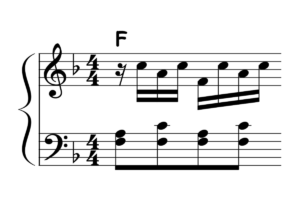
The raga and tala are the two fundamental elements of the Indian classical music. The raga is a melodic framework that is a combination of swaras, while tala is the basis of rhythm which keeps the time cycle. The Indian music is based on melody or single notes played in a specific order. The Western music, on the contrary, is based on harmony that uses tonic progression and counterpoint abundantly.
Pitch
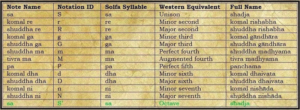
Western music uses major and minor scales and equal temperament notes, while the Indian Classical music uses a much more complex system of scales, with parent scales and descendant families that sound very different from each other (please note even western music has such nuances). In the Western music, there are only two sets of pitch ratios between the notes, one for the major scales and the other for the minor scales. Indian Classical music, on the other hand, does not follow an equi-tempered division of notes; instead uses different pitch ratio for the notes in different scales.
Scale
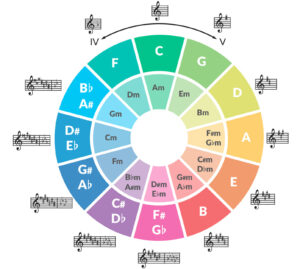
The tonic note of “Sa” is an adjustable note that can be placed anywhere and there is no fixed rule for where Sa should be particularly placed. Once the Sa is chosen, the basic Indian scale – Sa Re Ga Ma Pa Dha Ni – corresponds with the Western C major scale – Do Re Mi Fa So La Ti – with seven whole notes in the scale and a complete octave of twelve notes. A raga scale can begin on any pitch, the tonic roughly corresponding to C in Western scales. But unlike Western C, it does not necessarily have to be specific frequency and all other notes are generated in reference to the constant tonic.
At the heart of Indian music is the raga, which is a mood, a sentiment, expressed by a microtonal scale. There are many different ragas, and each has its own mood and its own corresponding microtonal scale based on what is called the natural harmonic series – the natural law of vibrations
In our study, we investigate the structural differences between Indian and Western music forms and compare the two forms of music in terms of harmony, rhythm, micro-tones, timbre and other spectral features
Through our classes we try to explore this area and focus on the following research questions
• What are the structural differences between Indian and Western musical forms? • How well can the audio features used for genre classification in Western music, capture the characteris-tics of Indian genres?
• Is there a feature set that can be used for cross-cultural music genre classification? In this case, for Indian and Western music.
The term “Classical music” originates from the Latin classicus, meaning first class, or for the Romans, artistry of the highest order. It encompasses a vast range of music styles over a period of 800 years. Sometimes, the term “Art music” is used. Western classical is just one among many different traditions of classical music, so when we’re discussing Western classical music, we’re specifically discussing European classical music. To make matters more confusing, there is a specific period in history referred to as the “Classical Period”, which differentiates the style of music in that era from other eras preceding and succeeding it. We shall delve into these different “periods” in subsequent article. The point is to be contextually aware of what is meant by “Classical” when you’re reading or conversing with others.