
Piano vs keyboard
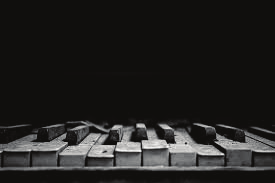
If you’re trying to decide whether to get a piano, digital piano or a keyboard, you should consider what you’re trying to play. If you’re just starting to play or prefer a traditional sound, a digital piano might do the trick. If you’re interested in something that offers a variety of sounds and can be used more easily in jamming, one-man show, production or recording, a keyboard is probably a better choice.
First, it’s important to understand what exactly we are talking about.
Though it doesn’t bear much resemblance to the violin, the piano is technically a stringed instrument, played percussively (rhythmically).
A ‘piano’ is an acoustic instrument with weighted keys. When the keys are pressed, wooden hammers strike the strings, and the note resonates within the body of the piano. This resonance produces the rich sound pianos are famous for.
It’s also the reason pianos are so large. The space within the instrument produces a richer sound, which is why there is such a tonal difference even between a grand and upright piano.
A keyboard, on the other hand, is actually a misnomer. The keyboard technically refers to the row of keys on any piano. But keyboard has now become synonymous with digital or electronic pianos.
Whereas a ‘keyboard’ is an electric instrument (requiring a power source) with unweighted (lighter) keys than a piano. And on a keyboard, you can change the sounds and instruments which adds great variety to your practice (many keyboards have hundreds of sounds you can choose from).
These are digital instruments and produce their sound by way of a synthesizer rather than by strings and hammers. This allows them to be smaller and more cost-effective. Also, on a keyboard you can play along with backing tracks.
Benefits and Features
For example, the weighted keys on the piano are good for building up finger strength which enhances you’re playing technique; and when you play a note or notes on a piano, the en harmonics (where the neighboring piano strings vibrate in harmony with the note/s you have just played) give a richness to the sound that is unique to the piano. But pianos need to be tuned regularly, which can be expensive.
By contrast, keyboards never need to be tuned. Playing the keyboard is also good for encouraging very precise playing. For example, clipping an occasional incorrect note while playing the piano is less noticeable than if you make the same mistake on a keyboard. Plus playing with backing tracks is very good for developing your ability to play precisely in time. Another differentiation among keyboards is the number of keys. Some keyboards have fewer than the traditional 88 keys you should find on a digital piano. This allows certain keyboards to be more compact and generally doesn’t impact the ability for the player to create music. While some keyboards have keys that are weighted, many do not. This means that their keys don’t move or react like piano keys.
The most obvious difference between keyboard and piano? The price.
Traditional pianos start in the low thousands and can range up to the price of a luxury car (US Dollars). They are an investment, not a frivolity. They may be far outside the budgets of beginners or those unsure how long they will stick with this new hobby.
keyboards can start out very reasonable, in the low hundreds, though higher-end models can be as much as a small upright piano.
Key Arrangement
You will find an identical key arrangement on both a keyboard and a piano. The finger movements and hand movements you make will also be identical between these two instruments.
You might find that some keyboards have slightly narrower keys than pianos. However, it is not a big enough difference that a student should have any trouble switching between the two when they are learning to play.
Range
A standard piano has 88 keys. Many keyboards have 88 keys as well, however, some of them have less. If you are purchasing a digital piano, you will want to consider whether or not it has the full range of a standard piano.
The investment is something that needs to be considered carefully. Even after the initial investment in an expensive piano, maintenance costs should be figured in as well.